2026 Top Commercial Nugget Ice Makers for Global Buyers
Choosing a Commercial Nugget Ice Maker in 2026 requires more than comparing production numbers. Global buyers must examine ice texture, water quality, electrical standards, service access, and daily demand. A machine producing soft, chewable nugget ice may suit cafés, hospitals, hotels, quick-service restaurants, and beverage counters. However, the ideal model depends on the operation.
Industry advisor John Mahlmeister offers a useful reminder: “The best ice machine is the one that fits the operation.” That principle remains practical. A compact undercounter unit may support a small café, while a larger modular system can serve a busy restaurant through a long afternoon rush. Look closely at storage capacity. A full bin at 2 p.m. is not enough if the machine recovers slowly.
This guide reviews the 2026 top Commercial Nugget Ice Maker options for international purchasers. It considers output, energy use, sanitation features, noise, installation flexibility, and after-sales support. It also considers regional realities, including voltage differences, water hardness, shipping conditions, and replacement-part availability. These details can change the total cost significantly.
Some rankings are imperfect.
Manufacturers publish laboratory figures, but real kitchens are messier. Doors open often. Filters become neglected. Ambient temperatures rise. Therefore, buyers should compare tested performance with their own workload, not marketing claims alone. A reliable purchase may cost more initially, yet reduce downtime and service pressure. That is not guaranteed. It deserves careful verification before ordering.
Commercial Nugget Ice Maker Types: 100–1,500 lb/24 h Output
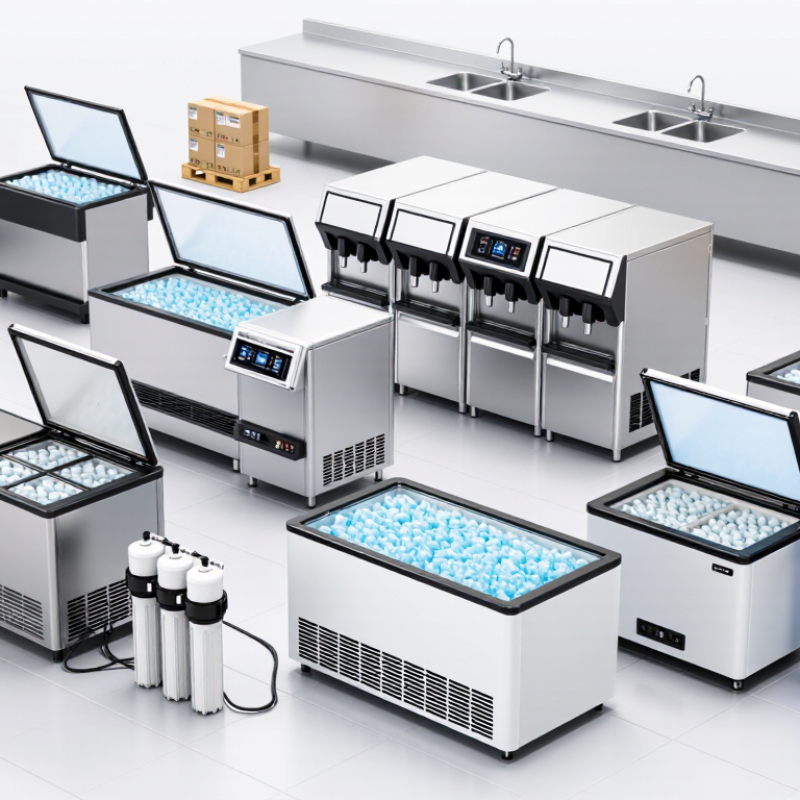
Commercial nugget ice makers now span roughly 100 to 1,500 pounds of production per 24 hours. This range suits cafés, hotels, healthcare facilities, and high-volume beverage counters. Capacity labels are useful, but they are not the whole story. Actual output can drop in warm rooms or during heavy service.
Small 100–300 lb/24 h machines often fit beneath counters. They work well for cafés, bars, and compact food outlets with steady daytime demand. Medium models, producing 400–800 lb/24 h, serve busy restaurants and hospitality areas. They usually need more clearance, stronger ventilation, and a larger storage bin.
Large 900–1,500 lb/24 h systems suit central kitchens, event venues, and locations with repeated peak demand. Space matters. Noise matters.
Air-cooled models simplify installation and usually consume less water. However, they release heat into the room and may struggle in poorly ventilated spaces. Water-cooled units can perform more consistently in hot environments, but they require careful water planning. Nugget ice quality also depends on compressor control, auger design, filtration, and cleaning access. Look for clear production data at stated room and water temperatures. Ask for storage capacity, not only daily output. A 1,200 lb machine may still disappoint if its bin fills too slowly during lunch service. I have seen buyers select maximum capacity and overlook maintenance access. That mistake becomes expensive. Assess the busiest two-hour period, available utilities, local service support, and realistic growth before choosing.
Production Planning: Match Peak Demand with 1.5–3× Ice Storage
2026 Top Commercial Nugget Ice Makers for Global Buyers
Peak demand is rarely average. Production planning should begin with the busiest service window, not annual sales. A practical target is 1.5–3 times peak daily ice consumption in storage. For an outlet using 800 kilograms daily, that means 1,200–2,400 kilograms of reserve capacity. This protects operations during heatwaves, delivery delays, cleaning cycles, and unexpected events.
Grand View Research’s 2024 commercial ice maker analysis estimates steady market growth through 2030, supported by foodservice expansion and replacement demand. That growth increases pressure on buyers to size equipment accurately. A nugget ice maker should refill the bin before the next service rush. Its output must also match water temperature, room temperature, operating hours, and local power conditions. Numbers on a specification sheet can look impressive. They may not survive a crowded kitchen.
In field planning, I calculate demand in hourly blocks. A hotel breakfast period needs a different reserve than an all-day beverage counter. I also allow extra space for melt loss and sanitation downtime. Keep the bin accessible, drained, and easy to clean. The 2022 FDA Food Code stresses hygienic ice handling, while global buyers should verify equivalent local requirements. The 1.5–3× rule is useful, but not sacred. Very seasonal sites may need more storage, while compact venues may waste energy with oversized bins. Test the plan against real sales data after installation. Forecasts are helpful. They are also imperfect.
2026 Top Commercial Nugget Ice Makers for Global Buyers - Production Planning: Match Peak Demand with 1.5–3× Ice Storage
| Planning Tier |
Recommended Application |
Peak Demand
(kg/day) |
Storage
Multiplier |
Target Ice Storage
(kg) |
Recommended Installed
Production (kg/day) |
Minimum Usable Bin
Capacity (kg) |
Typical System
Format |
Expected Refill
Window |
Planning Water Use
(L/kg ice) |
Planning Power Use
(kWh/kg ice) |
| Tier 1 |
Small cafés, boutique hotels, and quick-service beverage counters |
250 |
1.5× |
375 |
300–400 |
375–450 |
One modular maker with insulated bin |
12–24 hours |
1.1–1.4 |
0.08–0.15 |
| Tier 2 |
Busy restaurants, cocktail bars, and medium-sized hospitality operations |
500 |
2.0× |
1,000 |
600–750 |
1,000–1,200 |
One high-output maker and floor bin |
24–36 hours |
1.1–1.4 |
0.08–0.15 |
| Tier 3 |
Hotels, entertainment venues, hospitals, and regional foodservice facilities |
1,000 |
2.0× |
2,000 |
1,200–1,500 |
2,000–2,400 |
Two modular makers with shared storage |
36–48 hours |
1.1–1.4 |
0.08–0.15 |
| Tier 4 |
Central kitchens, beverage distribution hubs, stadiums, and large event sites |
2,000 |
3.0× |
6,000 |
2,400–3,000 |
6,000–7,200 |
Multiple modular makers with silo storage |
48–72 hours |
1.1–1.4 |
0.08–0.15 |
Planning basis: Target ice storage equals peak daily demand multiplied by the selected storage factor. Installed production capacity includes approximately 20–50% reserve above peak daily demand to support recovery after high-volume periods, maintenance, warmer ambient conditions, and partial-load operation. Water and power figures are general commercial planning ranges; final selection should be verified against local water quality, ambient temperature, electrical standards, duty cycle, ventilation, and the equipment specification.
Performance Benchmarks: AHRI 810 Capacity, Water Use, and Energy Ratings
2026 Top Commercial Nugget Ice Makers for Global Buyers
Performance Benchmarks: AHRI 810 Capacity, Water Use, and Energy Ratings
AHRI Standard 810 gives buyers a consistent basis for comparing commercial nugget ice makers. Capacity is commonly reported in pounds of ice produced within 24 hours. This figure depends on defined test conditions, including water temperature and surrounding air temperature. Check the complete rating, not just the largest daily number.
Capacity matters during lunch rushes, hotel breakfast service, and healthcare operations. A machine rated at 1,000 pounds per day may produce less in a warm kitchen. Nugget ice also needs reliable storage and steady dispensing. Review the rated bin size, recovery time, and production curve. Peak output alone can mislead.
Water use is often shown as gallons per 100 pounds of ice, while energy use appears as kilowatt-hours per 100 pounds. Lower figures can reduce operating costs, but local water temperature and filtration quality change real results. Air-cooled models may increase room heat. Water-cooled designs can use more water, even when they suit hotter spaces.
Use measured data.
Global buyers should match AHRI 810 results with local voltage, frequency, climate, and utility prices. Ask for test conditions and certification evidence. One practical weakness remains: laboratory figures cannot fully represent every kitchen. A busy bar, restricted airflow, or mineral-heavy water may expose performance gaps. Track actual output, water consumption, and energy use after installation. That record is often more valuable than a sales claim.
Global Compliance: NSF/ANSI 12, CE Marking, and 220–240 V Compatibility
For global buyers, commercial nugget ice makers should be evaluated through compliance evidence, not attractive specifications alone. NSF/ANSI 12 indicates that automatic ice-making equipment meets recognized food-safety and sanitation requirements. Buyers should request the current certificate, model coverage, and testing organization. Check whether the certificate covers the complete machine, not only selected components. This detail is often missed.
CE marking supports access to the European market when applicable safety, electromagnetic compatibility, and environmental requirements are fulfilled. It is not simply a quality logo. Ask for the EU Declaration of Conformity and relevant technical documentation. The machine should also match local electrical conditions. A 220–240 V rating is useful, but voltage alone is insufficient. Confirm frequency, phase, plug type, rated current, grounding, and startup load. A 50 Hz model may not perform correctly in every 60 Hz installation. Verify this before ordering.
Water quality and drainage also affect reliable operation. In a busy kitchen, a clear drain line and accessible filter can prevent avoidable service calls. Ambient temperature matters too. High heat may reduce production and increase cleaning needs. Specifications can look perfect on paper. Real installations are less forgiving. Buyers should compare test reports, labels, manuals, and warranty terms for the exact model. Small inconsistencies deserve questions, not assumptions.
2026 Buyer Scorecard: Cost per 100 lb, Warranty, Service, and ROI
Global buyers should score nugget ice makers by delivered cost, not purchase price. Record rated output, input power, water use, and local utility rates. AHRI Standard 810 provides a common testing method for automatic commercial ice makers. U.S. EPA qualification data reports roughly 15% lower energy use and 10% lower water use for efficient models. These are averages, not promises. Ambient heat, inlet-water temperature, and cleaning habits can change results sharply. Field results vary.
Calculate cost per 100 lb using electricity, water, sewer fees, filtration, and sanitation supplies. Use measured production, not brochure capacity. The U.S. Department of Energy’s 2018 Commercial Buildings Energy Consumption Survey confirms that food-service buildings are energy-intensive. Small efficiency gaps can therefore affect margins. For warranty scoring, check coverage length, labor inclusion, excluded parts, and response times. A five-year compressor warranty may offer little value if labor ends after twelve months. Get it in writing.
Estimate ROI from daily ice demand, avoided purchases, installation, downtime, and maintenance. Include two service visits annually and a replacement reserve. Recent dealer surveys published by Foodservice Equipment Reports identify service availability as a persistent purchasing concern. Survey evidence is not a guarantee. I would weight technician coverage as heavily as warranty length. That may reduce the apparent ROI. It may also prevent a costly Friday-night outage. Recheck assumptions during a 30-day operating trial; real kitchens are messier than test labs.
2026 Commercial Nugget Ice Maker Buyer Scorecard
Comparative planning benchmarks for global buyers. Scores combine operating cost, warranty coverage, service readiness, and estimated payback; lower cost and shorter payback receive higher scores.
| Commercial Segment |
Estimated Cost per 100 lb |
Typical Warranty |
Service Readiness |
Estimated Payback |
| Entry Countertop |
US$1.80 |
1 year |
60 / 100 |
29 months |
| Mid-Volume Modular |
US$1.35 |
2 years |
72 / 100 |
22 months |
| High-Volume Modular |
US$1.10 |
3 years |
82 / 100 |
17 months |
| Distributed Multi-Unit |
US$0.95 |
3 years |
88 / 100 |
14 months |
Planning assumptions: commercial operation, daily production near rated capacity, electricity at approximately US$0.14/kWh, routine cleaning included, and payback based on replacing purchased nugget ice with on-site production. Actual results vary by climate, water quality, utilization, installation cost, freight, local labor, and regional warranty support.