2026 Best Industrial Ice Maker Options for Your Business Needs?
Finding the right Industrial Ice Maker for your business is crucial. The options available can sometimes be overwhelming. Each industrial ice maker comes with unique features, capacities, and price points. It is essential to understand your specific needs before making a decision.
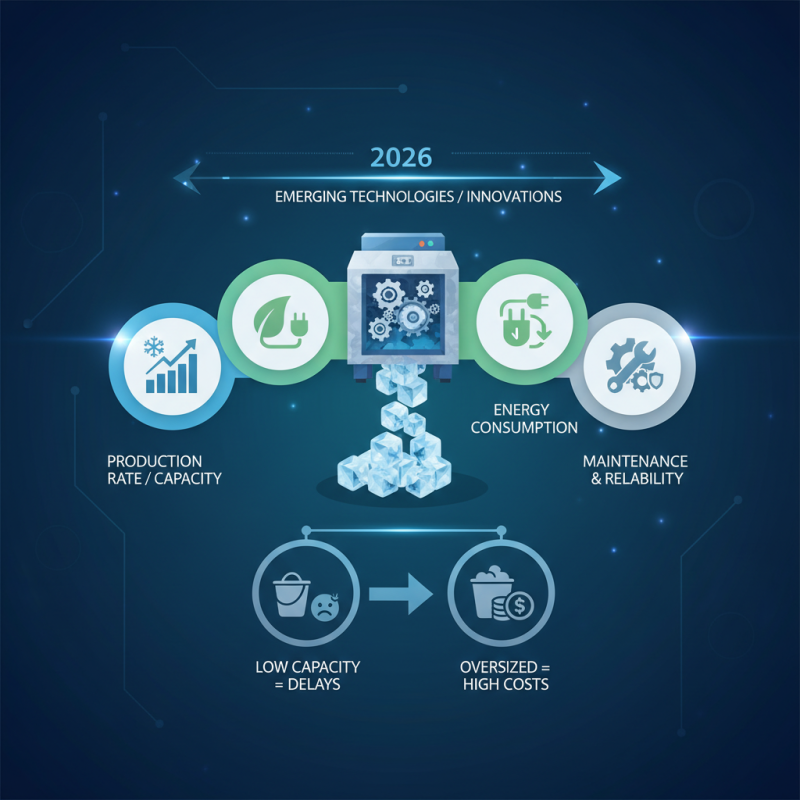
Many businesses often overlook the importance of choosing the right machine. A low-capacity ice maker can lead to operational delays. On the other hand, an oversized machine might cause unnecessary energy costs. It’s a balancing act, and careful consideration is needed. Choosing wisely not only ensures efficiency but also impacts costs.
In 2026, emerging technologies and innovations are shaping the industrial ice maker market. Businesses must be aware of these advancements. Considering factors such as production rate, energy consumption, and maintenance is vital. With the right knowledge, you can make an informed decision that leads to long-term success.
Understanding the Importance of Industrial Ice Makers for Businesses
Industrial ice makers are essential for many businesses, especially in food service. They help maintain product quality and safety. Fresh ice can enhance customer experience in restaurants, bars, and convenience stores. A reliable ice supply prevents service delays and keeps beverages cold.
Understanding your specific needs is crucial. Consider how much ice your business consumes daily. Too little ice can lead to disappointed customers. Too much can mean wasted resources. Evaluate the capacity, size, and type of ice produced. Each business has unique requirements. Not all models fit every environment.
However, selecting the right model isn't always straightforward. Many options exist, and features can be overwhelming. Businesses may overlook energy efficiency or maintenance needs. Ignoring these factors could lead to higher costs later. Regular upkeep is essential to avoid breakdowns. Ultimately, thoughtful consideration will ensure your investment meets your operational demands.
Key Features to Consider When Choosing an Industrial Ice Maker
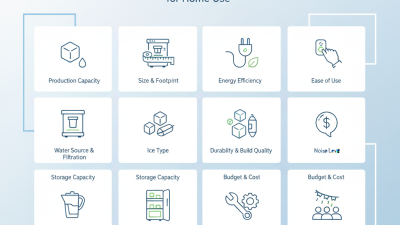
Choosing the right industrial ice maker is crucial for any business. Before making your decision, consider key features that enhance efficiency and performance. Pay attention to the ice production capacity. Determine how much ice you need daily. A unit that produces enough ice efficiently is essential for busy operations.
Ice quality is also key. Some machines can create clear, hard ice, while others may produce softer varieties. Your business type may prefer one over the other. For example, bars may favor clear ice for cocktails, while restaurants might need softer ice for food displays.
Tip: Assess your water supply. The quality of water affects both the taste and clarity of the ice. Regular maintenance is necessary. Clean your ice maker frequently to avoid bacterial growth. Lastly, don't overlook the machine's energy consumption. An energy-efficient model can save costs in the long run while being eco-friendly.
2026 Best Industrial Ice Maker Options for Your Business Needs
| Model |
Production Capacity (lbs/24h) |
Ice Type |
Energy Efficiency |
Dimensions (inches) |
Water Consumption (gallons/24h) |
| Model A |
800 |
Cube |
High Efficiency |
30 x 24 x 48 |
50 |
| Model B |
600 |
Flake |
Energy Star Rated |
28 x 24 x 49 |
40 |
| Model C |
1000 |
Nugget |
Very High Efficiency |
32 x 24 x 50 |
60 |
| Model D |
750 |
Cube |
Standard |
30 x 28 x 47 |
55 |
Top Industrial Ice Maker Brands to Explore in 2026
When selecting an industrial ice maker for your business, focusing on quality and capacity is essential. Reports indicate that the global industrial ice maker market is projected to grow at a rate of 6.5% annually, reflecting a rising demand. Businesses need reliable machines that can meet high-volume needs, especially in sectors like hospitality and food processing.
Many brands are gaining recognition for their exceptional products in 2026. For example, the market is seeing a shift towards eco-friendly models that save energy. Some models boast energy efficiency ratings as high as 30%. This reflects growing environmental awareness among companies. However, reflecting on durability and maintenance costs is crucial. A high initial investment can lead to long-term savings.
Tips for choosing the right machine: assess your daily ice requirement first. Higher capacity machines might seem ideal, but they can lead to inefficiencies if not fully utilized. Additionally, consider the water supply and cooling method. Ice makers that require specific setups can increase installation costs and complexity. Understanding these factors can significantly influence your operational efficiency.
Comparative Analysis of Different Ice Production Capacities
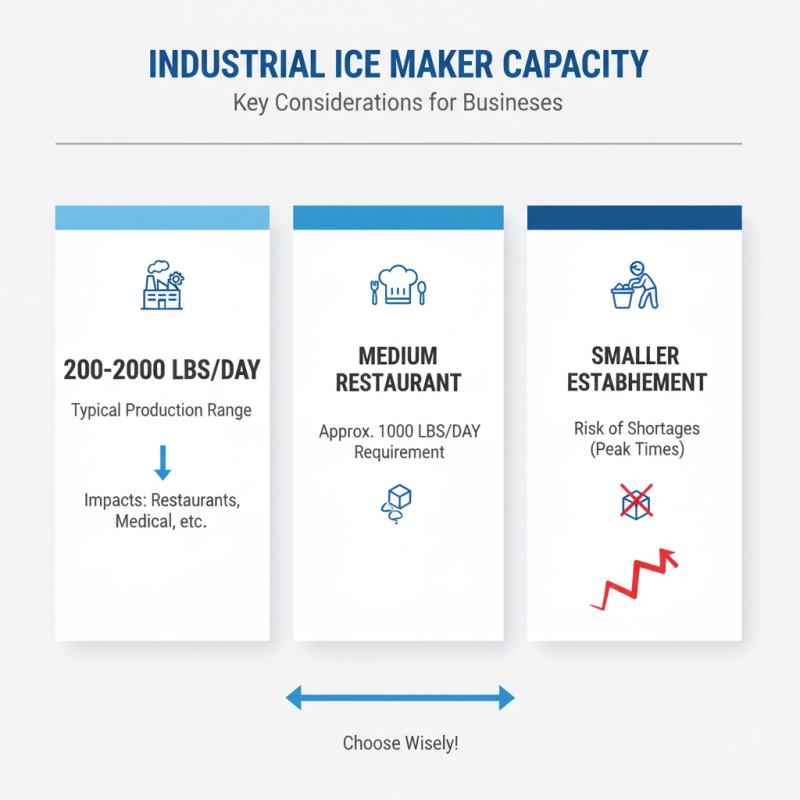
When evaluating industrial ice makers, the production capacity is crucial. Reports indicate that the average ice production capacity ranges from 200 to 2000 pounds per day. This variation impacts various businesses, from restaurants to medical facilities. For instance, a medium-sized restaurant typically requires around 1,000 pounds daily. A smaller establishment might struggle with this demand, leading to ice shortages during peak times.
Different ice makers offer distinct production capacities. Choosing the right one can be challenging. Some models may excel in high-volume production but require more energy. Others may be energy-efficient but fall short during peak hours. According to industry professionals, businesses must assess their specific needs before making a decision. Ice production rates also depend on water and ambient temperatures. Factors like these can influence efficiency, which may lead to unexpected costs.
In an ideal scenario, the ice production required aligns perfectly with capacity. However, many businesses find themselves in overcapacity situations. This can lead to wasted resources. There is no one-size-fits-all solution. An in-depth analysis of current and projected ice needs can aid in selecting the most effective maker. Careful consideration may reveal potential shortcomings in preferred systems. Addressing these early could save time and money in the long run.
Maintenance Tips for Maximizing the Lifespan of Your Ice Maker
Proper maintenance of your industrial ice maker is crucial. It can significantly extend its lifespan and improve efficiency. Research indicates that a well-maintained machine can last up to 10 years longer than one that isn’t cared for properly. Routine cleaning is essential for removing mineral deposits and bacteria. Ignoring this might lead to ice contamination, affecting your business operations.
Monitor the water quality regularly. Poor quality water can cause scaling and affect performance. In fact, nearly 30% of ice machine failures stem from water-related issues. Regularly check and replace filters as needed. It’s a simple task that can prevent costly repairs. Keeping the condenser clean also ensures maximum efficiency, which saves energy and reduces costs over time.
Pay attention to the environment as well. High temperatures and humidity can hinder performance. An optimal location keeps the unit cool and dry. Installing a temperature monitoring system could be a wise choice. Make sure your team is trained in basic troubleshooting. Many issues can be resolved without a technician, saving time and expense.
Ice Maker Performance Comparison (2026)