Choosing a China Ice Maker Supplier requires more than comparing catalog prices. Global buyers must examine production experience, cooling technology, sanitation design, and after-sales support. A machine may look impressive in photographs, yet its condenser can struggle in a hot workshop. That detail matters.
Wang Zhen, a senior refrigeration engineer with over twenty years of equipment experience, once said, “A dependable ice maker is judged by stable ice quality, not by its first impressive output.” This practical view guides our selection of China’s leading suppliers. We consider cube, flake, tube, and block ice systems. We also examine daily capacity, water filtration, energy use, stainless-steel construction, and cleaning access. Small details often create large operating costs.
Field experience remains important. A seafood processor may need flake ice at a coastal temperature of 35°C. A hotel may require quiet cube production beside guest rooms. A supermarket may value compact dimensions more than maximum output. These needs are not interchangeable.
Not every supplier fits every buyer. That is the uncomfortable truth. Some manufacturers communicate quickly but provide weak technical drawings. Others build excellent machines but lack local service partners. Buyers should request factory videos, test records, component brands, warranty terms, and installation guidance. Independent inspections can reduce uncertainty before payment and shipment.
This guide introduces ten China Ice Maker Supplier candidates for global buyers. Their strengths differ across capacity, customization, efficiency, and support. Review each option carefully. The cheapest quotation may not be the cheapest machine to operate.
China’s top ice maker suppliers should be assessed through market evidence, not popularity alone. Industry estimates differ because some reports include household units, while others cover commercial equipment only. Grand View Research’s 2024 commercial ice maker analysis places the market at roughly USD 5 billion in 2023, with continued growth expected through 2030. The figure is useful, but not absolute. Demand varies across hotels, seafood processing, healthcare, and retail. Each segment needs a different ice form, output, and storage rhythm.
Supplier selection must connect capacity with real operating conditions. Ask for measured output at specific water and ambient temperatures. A machine rated at 1,000 kilograms daily may produce less in a hot loading area. Check refrigerant type, voltage, water use, drain design, and cleaning access. U.S. Environmental Protection Agency efficiency criteria indicate that qualified commercial ice machines can use about 10% less energy and 20% less water than standard models. Small differences matter. They become major costs over time.
Reliable suppliers should provide test records, quality-control procedures, spare-parts plans, and technical support. Request third-party performance tests, food-contact declarations, and shipment inspection evidence. Verify certifications for the destination market. Generic certificates are not enough. Warranty length proves little. Field evaluations often show that unclear installation limits create more disputes than compressor failures. Score response time, documentation quality, and pilot-order consistency. That last check is easy to overlook. It may reveal the real supplier.
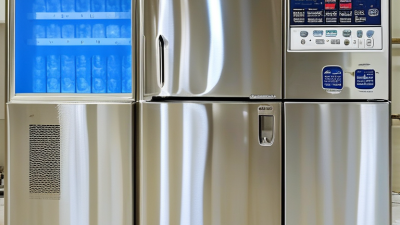
China Top 10 Ice Maker Suppliers for Global Buyers
How to Evaluate China’s Leading Ice Maker Manufacturers
A practical evaluation starts with the machine’s intended workload. Define daily ice output, ice type, ambient temperature, water quality, and available floor space. A hotel kitchen may need compact cube production, while a seafood distributor may require continuous flake ice. Do not compare capacity figures without checking test conditions. They can be surprisingly different.
Inspect the manufacturer’s technical evidence. Request production videos, factory photographs, component lists, and recent test records. Ask whether output was measured at a specific water temperature. Check evaporator materials, insulation thickness, compressor specifications, and cleaning access. Small details matter. A narrow drain can slow sanitation. A poorly placed control panel can frustrate operators. Verify electrical compatibility, safety documentation, and export experience for your destination market.
After-sales support often separates a dependable supplier from a polished seller. Confirm the warranty scope, response time, spare-parts availability, and remote troubleshooting process. Ask for a recommended spare-parts list with prices and delivery estimates. A live factory audit is useful, but it is not perfect; one visit cannot reveal every production weakness. Speak with recent overseas buyers when possible, and compare their feedback with the supplier’s claims. Some manufacturers communicate well before payment, then respond slowly after installation. That risk deserves written service terms, not verbal confidence. Be willing to reject a lower quote when unclear testing, weak documentation, or inconsistent answers appear.
| Rank | Supplier Profile | Primary Manufacturing Region | Main Ice Machine Types | Typical Daily Output | Common Ice Formats | Export Customization | Common Compliance Documents | Typical MOQ | Indicative Lead Time | Warranty Range | Buyer Evaluation Score |
|---|---|---|---|---|---|---|---|---|---|---|---|
| 1 | Supplier Profile A | Guangdong | Cube, flake, tube, and modular systems | 50–10,000 kg/day | Cube, flake, tube | High; voltage, language, packaging, and OEM panels | CE, EMC, RoHS, ISO 9001 where applicable | 1 unit for standard models | 25–45 days | 12–24 months | 4.8/5 |
| 2 | Supplier Profile B | Zhejiang | Commercial cube and flake machines | 30–5,000 kg/day | Cube, flake | High; regional electrical configurations supported | CE, RoHS, test reports, ISO documentation on request | 1–2 units | 30–50 days | 12 months | 4.6/5 |
| 3 | Supplier Profile C | Jiangsu | Tube, block, and industrial flake systems | 1,000–30,000 kg/day | Tube, block, flake | Medium to high; engineering-led projects | CE, ISO 9001, pressure-system documentation where required | 1 project | 45–90 days | 12–18 months | 4.5/5 |
| 4 | Supplier Profile D | Fujian | Undercounter, countertop, and cube machines | 20–1,500 kg/day | Cube, nugget-style formats | Medium; private labeling and carton changes | CE, EMC, RoHS, food-contact declarations where applicable | 1–5 units | 20–40 days | 12 months | 4.3/5 |
| 5 | Supplier Profile E | Shandong | Large flake, block, and industrial systems | 2,000–50,000 kg/day | Flake, block | Medium; project specifications accepted | CE, ISO 9001, installation and commissioning files | 1 project | 60–120 days | 12–18 months | 4.2/5 |
| 6 | Supplier Profile F | Guangxi | Cube, flake, and small modular machines | 30–3,000 kg/day | Cube, flake | Medium; standard export configurations | CE, RoHS, electrical safety test records | 1–3 units | 30–55 days | 12 months | 4.1/5 |
| 7 | Supplier Profile G | Zhejiang | Ice dispensers, cube, and commercial flake machines | 25–2,000 kg/day | Cube, flake, dispensed ice | Medium; control-panel and packaging adaptations | CE, EMC, RoHS, user manuals in multiple languages | 1–5 units | 30–60 days | 12 months | 4.0/5 |
| 8 | Supplier Profile H | Jiangsu | Tube, cube, and integrated storage systems | 300–12,000 kg/day | Tube, cube | Medium; cold-room and storage integration | CE, ISO documentation, refrigeration-system test records | 1 project | 45–85 days | 12–18 months | 3.9/5 |
| 9 | Supplier Profile I | Guangdong | Countertop, undercounter, and hospitality machines | 15–1,000 kg/day | Cube, nugget-style formats | Low to medium; mainly standard configurations | CE, EMC, RoHS, standard inspection reports | 1–10 units | 20–45 days | 12 months | 3.8/5 |
| 10 | Supplier Profile J | Henan | Industrial block, flake, and containerized systems | 3,000–60,000 kg/day | Block, flake | Medium; suitable for large project orders | CE, ISO 9001, engineering drawings, commissioning records | 1 project | 70–140 days | 12 months | 3.7/5 |
| Evaluation note: Output, lead time, MOQ, warranty, and certification availability are indicative market ranges for China-made commercial ice equipment. Buyers should verify current specifications, refrigerant type, energy performance, testing documents, after-sales support, and destination-country requirements before placing an order. | |||||||||||
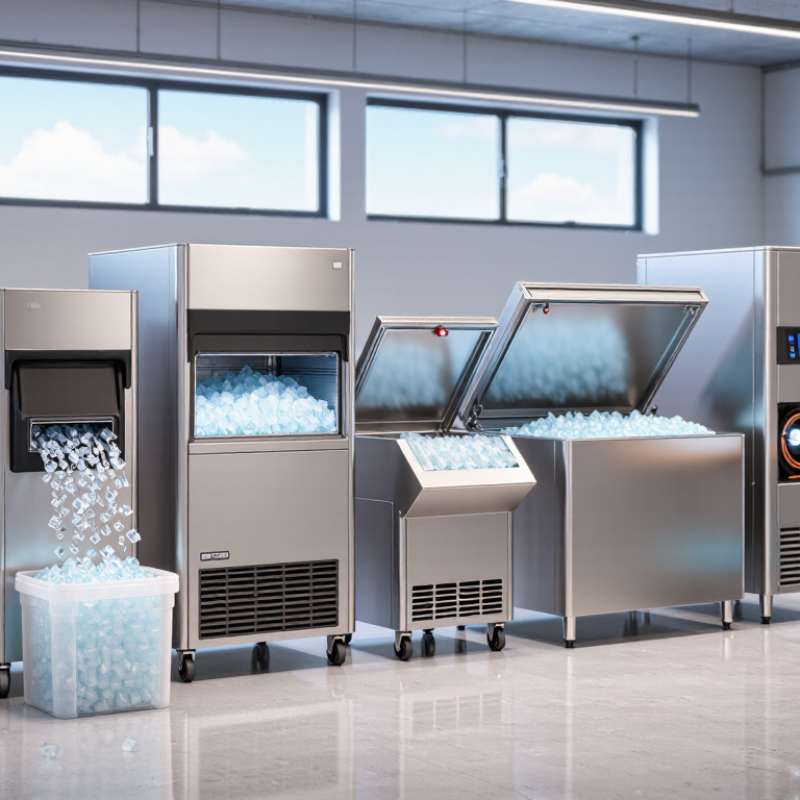
China’s leading ice maker suppliers serve hotels, restaurants, supermarkets, hospitals, and fishing businesses worldwide. Their product ranges often include cube, flake, tube, and block ice machines. Capacity may range from a few dozen kilograms to several tons daily. Buyers should match output with peak demand, not average demand.
During supplier evaluations, experienced buyers inspect stainless steel grades, compressor performance, insulation, water filtration, and cleaning access. A machine should produce consistent ice in a warm, humid room. Ask for production tests using your local water conditions. Factory videos help, but live testing offers stronger evidence. Request energy data, spare parts lists, warranty terms, and installation guidance before payment. Export experience also matters because packaging, voltage, language, and port handling can affect the final result.
A polished catalog is not proof of dependable engineering. I once assumed a larger production figure meant better value. It did not. Maintenance access and response time mattered more. Some suppliers provide detailed manuals, inspection records, and customized control panels, while others need closer technical supervision. Buyers should compare at least three quotations with identical specifications. Check certifications through valid documents, not logos printed on brochures. Product quality can vary between batches, so pre-shipment inspection remains useful. Even strong suppliers may miss a small detail, such as drain size or plug type. That detail can delay installation.
China’s ice maker suppliers serve varied applications, from compact cube machines for cafés to flake, tube, nugget, and block ice systems for seafood, healthcare, and food processing.
Product selection should follow actual ice demand, storage space, water quality, and ambient temperature. A machine rated at 500 kilograms per day may produce less in a hot workshop.
This detail is often overlooked.
Customization usually covers voltage, frequency, ice shape, cabinet size, control panels, water filters, packaging, and remote monitoring.
Experienced buyers should request drawings before production. Confirm condenser type, refrigerant, drainage design, and electrical protection. Small design changes can affect installation costs.
I have seen promising specifications fail when local water conditions were ignored.
That deserves closer review.
Certifications should match the destination market and the exact model, not merely the factory.
Ask for current test reports, declaration documents, electrical safety evidence, and food-contact material records where applicable. ISO 9001 can support process control, but it does not prove every machine performs consistently.
Production capacity also needs verification through monthly output, assembly lines, testing stations, and critical component stock.
Reliable suppliers can provide batch records, factory acceptance tests, spare-parts plans, and clear warranty terms.
Buyers should compare tested output, not only catalog numbers.
Room for improvement remains. Audits and sample testing still matter.
Comparing China’s top ice maker suppliers requires more than checking the lowest quotation. Buyers should request prices under the same terms, such as EXW, FOB, or CIF, because freight and port charges can change the final cost. A machine producing 500 kilograms of cube ice daily may need different power, water, and cooling conditions than a flake ice model. Confirm output testing, voltage, refrigerant type, stainless steel grade, and included accessories. A low quote can be a trap.
From practical supplier evaluations, reliable exporters provide factory videos, test reports, packing photographs, and clear commercial invoices. They should explain lead times, spare-part availability, installation guidance, and warranty response procedures. Ask whether technicians can support remote commissioning and whether replacement parts are packed separately. Export experience matters. Check documentation accuracy, wooden-case treatment, labeling, and the supplier’s ability to arrange inspections before shipment. Small omissions create expensive delays.
Payment terms deserve careful review. A common structure includes a deposit, balance after inspection, and bank records matching the contract. Buyers should compare production capacity with promised delivery dates, especially before hot-season demand. My own early comparisons focused too heavily on machine price and underestimated maintenance access. That was a mistake. Request a sample contract and list every assumption, including water quality and ambient temperature. A supplier may look professional online, yet daily communication can reveal more. Test response times, technical clarity, and willingness to correct unclear specifications.