How to Choose an Ice Machine Factory in 2026?
Choosing an Ice Machine Factory in 2026 requires more than comparing catalog prices. It demands evidence, practical judgment, and careful questions. A reliable supplier should explain production capacity, quality controls, testing procedures, and after-sales support. Ask where compressors, controllers, and food-contact materials come from. Request recent certification records, not attractive promises.
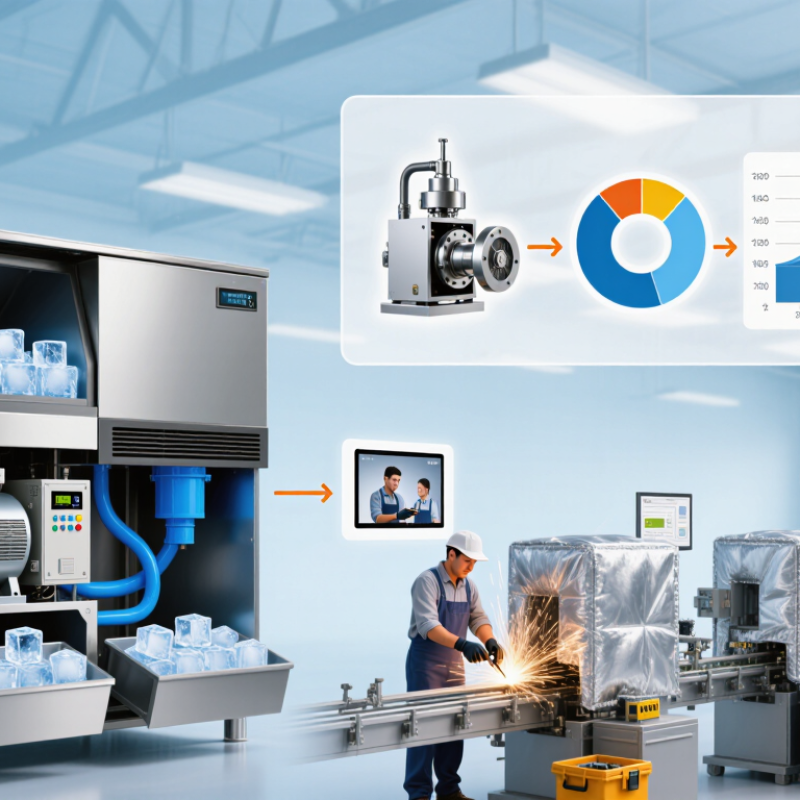
Visit the factory when possible. Observe stainless-steel welding, insulation work, electrical testing, and final cleaning. A well-organized line usually reveals its standards. However, appearance can mislead. A polished showroom does not guarantee stable performance. Ask for test reports showing ice output, water consumption, energy use, and operating conditions. Compare these figures with your climate and daily demand.
Experienced buyers should also examine service details. Can the factory provide installation guidance, spare parts, troubleshooting videos, and technician support? How quickly can it respond when a machine stops during peak season? Check references from businesses with similar requirements. Their feedback may reveal noise problems, delayed parts, or inconsistent ice quality. Those details matter.
The best Ice Machine Factory may not offer the lowest quotation. It should offer transparent terms, consistent manufacturing, and realistic delivery schedules. Confirm warranty coverage, payment conditions, packaging, and customization limits in writing. Some factories will promise everything during negotiation. They may struggle later.
No factory is perfect. Your evaluation should recognize weaknesses, not hide them. A trustworthy partner admits limitations and explains corrective actions. In 2026, choose the supplier that combines tested technology, responsive service, and long-term accountability. That choice protects investment and supports dependable ice production.
Define Ice Type, Output, and Site Needs in lb/day Before Factory Selection
How to Choose an Ice Machine Factory in 2026?
Before contacting a factory, define your ice type, daily output, and installation conditions. Cube, flake, nugget, and block ice serve different operations. A seafood counter may need flake ice, while beverage service usually needs clear cubes. Measure real demand in lb/day, not only peak sales. Add a practical reserve of 15–25% for busy periods, but avoid buying excessive capacity. My first estimate was too optimistic once weekend demand and melting losses were included.
Check the site carefully. Record available floor space, ceiling height, drainage, ventilation, water quality, and electrical supply. A factory should explain how its machine performs in your ambient temperature. Ask for tested output data, energy consumption, noise levels, and cleaning requirements. Request a sample production test when possible. Reliable suppliers provide drawings, manuals, spare-parts planning, and clear warranty terms. Their answers should be specific, not vague promises. Experience matters here.
Tips:
Share your expected lb/day range and peak hours. Ask whether output changes in hot weather. Confirm the machine’s footprint before ordering. Leave service access around every panel. Also, examine maintenance steps yourself. If cleaning takes too long, staff may postpone it. That small weakness can become a daily operating problem. A factory that accepts technical questions openly is usually easier to evaluate and support.
Compare Rated Capacity Under AHRI 810 Test Conditions and 24-Hour Data
How to Choose an Ice Machine Factory in 2026?
When evaluating an ice machine factory, compare rated capacity under AHRI 810 test conditions. This standard creates a fairer basis for judging production performance, water use, and energy consumption. Ask for complete test documentation, not only a number printed on a brochure. Check the ice type, ambient temperature, water temperature, and power supply used during testing. A machine rated at 1,000 kilograms daily may produce less in a hot kitchen. That difference matters.
Capacity is only one part of the decision. Request verified 24-hour production data from real operating environments. Examine output changes during startup, cleaning cycles, and warmer periods. Speak with technical staff about condenser maintenance, sensor accuracy, and recovery time after a full bin. Their answers reveal practical experience. Factory audits can also confirm assembly quality, testing procedures, and staff training. However, even a well-organized factory can provide incomplete data. Keep questioning.
Tips: Compare AHRI 810 ratings with 24-hour field results in the same table. Record water temperature, room temperature, ice size, and downtime. Ask for service records from similar installations. Visit the testing area if possible. Look closely at rejected units. That detail is often overlooked. A small mismatch between laboratory capacity and daily output should not automatically disqualify a factory, but it deserves explanation. Be cautious when the factory cannot explain the gap clearly.
How to Choose an Ice Machine Factory in 2026? — Compare Rated Capacity Under AHRI 810 Test Conditions and 24-Hour Data
| Anonymous Factory Profile |
Machine Configuration |
Ice Type |
Rated Capacity Under AHRI 810
lb/24 h |
Rated Energy Use
kWh/100 lb |
Rated Water Use
gal/100 lb |
24-Hour Output at 75°F Air / 50°F Water
lb/24 h |
24-Hour Energy Use
kWh/100 lb |
Output Difference vs. Rated Capacity |
AHRI 810 Test Report |
Factory Verification Priority |
| Profile 1 |
Undercounter, air-cooled, approximately 22 in wide |
Crescent cube |
400 |
6.0 |
18.0 |
455 |
5.4 |
+13.8% |
Available |
Confirm compressor and condenser performance at high ambient temperature |
| Profile 2 |
Modular, air-cooled, approximately 30 in wide |
Half cube |
800 |
5.4 |
15.0 |
930 |
4.9 |
+16.3% |
Available |
Check batch-cycle records, ice thickness consistency, and harvest reliability |
| Profile 3 |
Modular, water-cooled, approximately 30 in wide |
Full cube |
1,000 |
4.8 |
10.5 |
1,145 |
4.4 |
+14.5% |
Verify scope |
Evaluate total water cost, cooling-water regulation, and discharge requirements |
| Profile 4 |
Modular, air-cooled, approximately 48 in wide |
Gourmet cube |
1,200 |
5.1 |
14.0 |
1,365 |
4.7 |
+13.8% |
Available |
Review airflow clearance, filter access, and condenser-cleaning instructions |
| Profile 5 |
Modular, air-cooled, approximately 48 in wide |
Flake ice |
1,500 |
4.6 |
12.0 |
1,680 |
4.2 |
+12.0% |
Verify scope |
Confirm ice moisture content, auger durability, and continuous-duty testing |
| Profile 6 |
Large modular, air-cooled, approximately 48 in wide |
Half cube |
1,800 |
4.5 |
13.0 |
2,025 |
4.1 |
+12.5% |
Available |
Audit production capacity, spare-parts inventory, and service response coverage |
| Profile 7 |
Large modular, water-cooled, approximately 48 in wide |
Full cube |
2,000 |
4.2 |
9.5 |
2,230 |
3.9 |
+11.5% |
Verify scope |
Compare lifecycle water cost against air-cooled power savings and site limitations |
Comparison basis:
Rated capacity and energy values should be checked against an AHRI 810 test report for the exact model, configuration, voltage, refrigerant, and condenser type. The 24-hour figures above represent a cooler operating scenario at 75°F ambient air and 50°F entering water; actual production varies with water quality, incoming water temperature, ventilation, condenser cleanliness, bin control, and duty cycle.
Factory-selection checks:
Request the complete test report, serial-number traceability, production inspection records, electrical safety documentation, replacement-part list, warranty terms, preventive-maintenance schedule, and a documented 24-hour performance test before placing a production order.
Verify NSF/ANSI 12 Food Safety, HACCP Controls, and Cleanability
How to Choose an Ice Machine Factory in 2026?
Choosing an ice machine factory in 2026 requires more than comparing output and price. Ask for current evidence of NSF/ANSI 12 compliance. Check the certificate scope, listed models, materials, and production site. A certificate for one machine may not cover every configuration. Request test reports, renewal dates, and documented corrective actions. Verify the certificate through the issuing organization. Do not accept a logo alone. Paper is not proof.
A reliable factory should explain its HACCP controls in practical terms. Ask where hazards are assessed, from incoming water to ice storage. Confirm controls for water quality, employee hygiene, condensation, foreign materials, and post-cleaning inspection. Request monitoring records for critical control points. Review how deviations are recorded and corrected. Vague answers deserve further questions. A polished showroom can still hide weak documentation.
Cleanability should be visible, not promised. Inspect product zones, drain paths, corners, seals, and ice-contact surfaces. Look for smooth welds and removable panels. Ask how operators access the evaporator, bin, water lines, and filters. Cleaning instructions should state tools, chemicals, contact time, rinsing, and inspection steps. ATP testing can support verification, but it does not replace sanitation records or microbiological review. Some factories overstate “easy cleaning.” Open the machine and test that claim.
How to Choose an Ice Machine Factory in 2026?
Verify NSF/ANSI 12 food-equipment requirements, documented HACCP controls, and hygienic cleanability before approving a supplier.
NSF/ANSI 12
Confirm that the factory can provide applicable third-party certification or test evidence for automatic ice-making equipment.
HACCP Controls
The chart shows the seven HACCP principles defined by Codex Alimentarius. Ask for documented monitoring, corrective-action, verification, and record procedures.
Cleanability
Inspect smooth food-contact surfaces, accessible internal areas, drainage, removable parts, and clear cleaning and sanitizing instructions.